Articles

Importance of Supply Chain Management Software

From ensuring that your products reach your customers to preventing disruptions to your operations, supply chain management is critical for your business.
Supply Chain Management Software - Importance

What is Supply Chain Management?


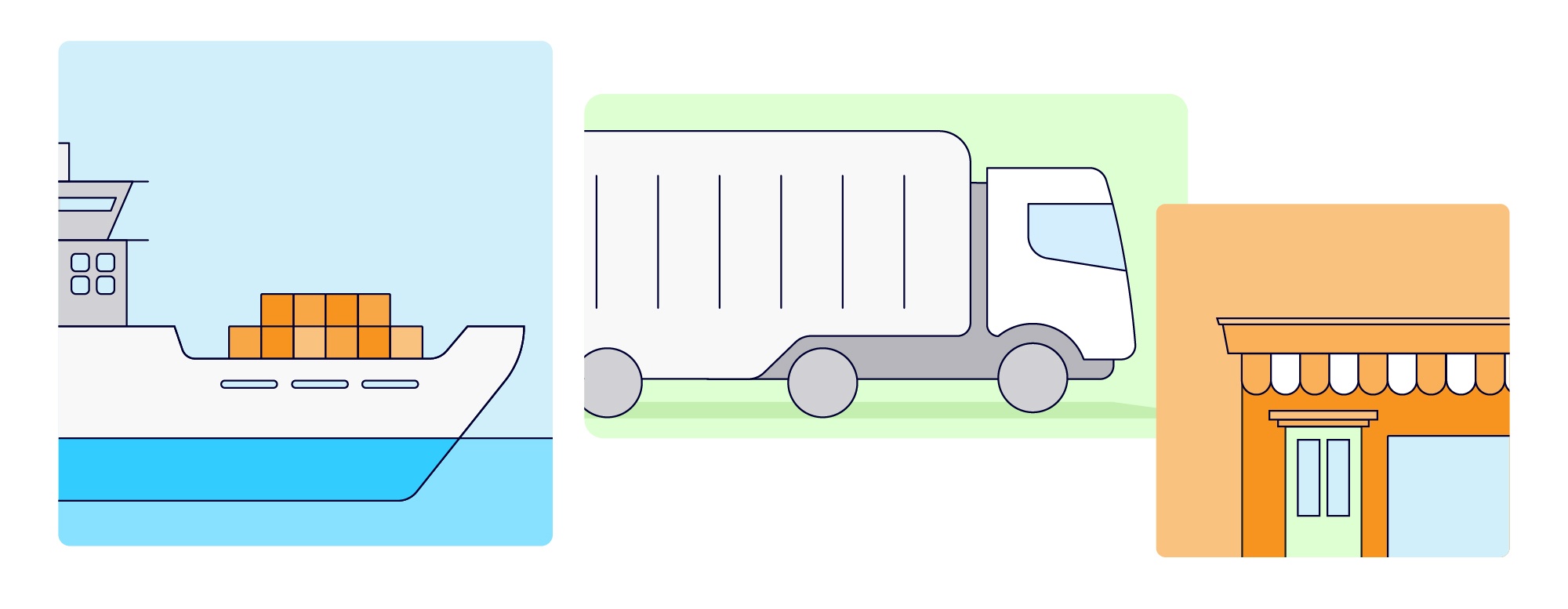
Supply chain management (SCM) is the strategic management of the flow of goods and services, involving the movement and storage of raw materials, work-in-process inventory, and finished goods from point of origin to point of consumption.


The pressure on mid-sized businesses has never been higher. Customers expect faster delivery times, regulatory bodies demand stricter compliance, and global supply chains are more volatile than ever. For many operational leaders, keeping up with this pace feels like a juggling act where dropping a single ball could cost you a key client or result in a failed audit.

If you are still managing your inventory, orders, and logistics through disparate spreadsheets or legacy systems, you are likely feeling this strain more than most. This is where supply chain management (SCM) software comes in.

Simply put, supply chain management software is a digital tool that oversees the flow of goods, data, and finances as a product moves from point of origin to its final destination. But modern SCM is more than just tracking, it is about integration.

Moving away from manual spreadsheets to a unified, cloud-based system isn’t just a tech upgrade. It is the only way to transition from simply surviving day-to-day operations to truly thriving and scaling your business.


Effective SCM streamlines supply-side activities to maximize customer value and gain a competitive advantage in the marketplace.

Supply chain management includes a wide range of activities, such as:

  • Sourcing: Finding and procuring raw materials and other inputs.
  • Manufacturing: Turning raw materials into finished goods.
  • Warehousing: Storing finished goods until they are needed.
  • Transportation: Moving finished goods from one location to another.
  • Distribution: Delivering finished goods to customers.
  • Customer service: Handling customer inquiries and resolving problems.

When companies manage their supply chain strategically and effectively, the results are lowered costs, streamlined workflows, and satisfied customers.


Why is Supply Chain Management Important?

In recent years, supply chains have been disrupted by a number of factors, including the pandemic, global upheaval, and economic instability. This has made it more important than ever for businesses to have effective supply chain management strategies in place.

Effective supply chain management can help businesses to:

  • Improve visibility and flexibility across workflows: This means having real-time data about the status of orders, inventory, and shipments. This information can be used to make better decisions about production, transportation, and inventory levels.
  • Reduce operating costs: This can be achieved through a number of ways, such as optimizing transportation routes, reducing inventory levels, and negotiating better prices with suppliers.
  • Increase predictability and resiliency: This means being able to anticipate and respond to changes in demand and supply. This can help businesses to avoid stockouts and delays.

There are a number of software solutions that can help businesses to improve their supply chain management. These solutions can provide businesses with the visibility, flexibility, and insights they need to make better decisions and improve their bottom line.


Why SCM Software is Critical for Growth

For many small and mid-sized businesses (SMBs), the early years are about survival. You do whatever it takes to get the product out the door. But as you grow, “whatever it takes” becomes expensive and unsustainable. Shifting from survival mode to strategic growth requires a fundamental change in how you handle data and operations.


Unlocking Unified Data Access

The biggest growth killer for mid-sized companies is data silos. When your sales team doesn’t know what is in the warehouse, and your finance team can’t see real-time shipping costs, you are making decisions based on old news.

Modern supply chain management software breaks down these silos. It connects finance, sales, operations, and even HR into a single, cohesive ecosystem. This means when a sales rep closes a deal, inventory is automatically updated, finance sees the revenue projection, and the warehouse gets a pick ticket. You gain a 360-degree view of your business, empowering you to make faster, smarter decisions based on real-time reality rather than end-of-month reports.


Automating Regulatory Compliance

Whether you are in manufacturing, construction, or distribution, regulatory hurdles are a fact of life. Staying compliant with OSHA safety standards, EPA environmental regulations, or intricate financial audit requirements can drain your resources if managed manually.

A robust supply chain solution automates much of this compliance burden. Instead of scrambling to gather data for an audit, the system tracks every transaction, movement, and safety check in real-time. You can generate accurate reports with a few clicks, ensuring you stay on the right side of regulations without dedicating your entire team to paperwork.

The Core Components of Modern SCM Software

To understand how this technology transforms your business, we need to look at the specific engines that drive it. A robust SCM solution offers three pillars of functionality:


Inventory Management

Knowing what you have is the baseline. Knowing exactly where it is, when it expires, and when you need to reorder is where the value lies. SCM software provides real-time tracking to prevent the dual nightmares of inventory management: stockouts (which lose sales) and overstocking (which ties up cash flow).


Order Management

The journey from “Order Received” to “Cash in Bank” needs to be as short as possible. SCM software automates the order-to-cash cycle. By reducing manual touchpoints, you speed up processing times, reduce error rates, and get paid faster.


Warehouse Management

Your warehouse should be a well-oiled machine. SCM tools streamline the pick, pack, and ship processes. By optimizing routes through the warehouse and automating packing slips and labels, you reduce the time it takes to get a product out the door.


“[With SCM software], logistics operations are more efficient, and so is the way we receive and process orders.” – Clyde Attard, Sales Division Manager, P. Cutajar & Co. Ltd.


Spotlight: The Role of EDI in Supply Chain

One of the most powerful, yet often misunderstood, features of supply chain software is Electronic Data Interchange, or EDI.

What is EDI?

In simple terms, EDI is the digital communication between business systems. It replaces the mailing, faxing, or emailing of paper documents (like purchase orders and invoices) with a standardized electronic format that computers can read directly.

Why it Matters

If you work with large retailers or suppliers, EDI is often a requirement. But even if it isn’t, it should be a priority. EDI eliminates manual data entry. When a partner sends a purchase order via EDI, it flows directly into your ERP system without anyone having to type a single keystroke. This drastically reduces errors and speeds up transaction times.

The Acumatica Difference

Many ERP systems treat EDI as an afterthought, requiring you to bolt on clunky third-party add-ons that break whenever the software updates. Acumatica offers integrated EDI. This means it is built into the fabric of the platform, offering a seamless experience that puts you in control of your partner relationships without the technical headaches.


Challenges of the SCM Software

As with any new system implementation, supply chain management software can bring challenges. For instance:

  • Cost: It can be expensive – particularly because SCM is complex and may require more than out-of-the-box functionality. Customization fees add up quickly, as do the per-user costs most systems charge.
  • Complexity: the software can be complex to use, and businesses may need to invest in training for their employees.
  • Data integration: CSM software requires integration with a variety of other systems, such as enterprise resource planning (ERP) and customer relationship management (CRM) systems. This can be a complex and time-consuming process.
  • Security: Supply chain management system can contain sensitive data, such as customer orders and financial information. Businesses need to ensure that the software is secure from cyberattacks.
  • Change management: Implementing supply chain management software can require significant changes to business processes. Businesses need to carefully manage the change process to ensure that the software is adopted successfully.

Despite these challenges, supply chain management software can offer a number of benefits to businesses. By carefully considering the challenges involved, businesses can make informed decisions about whether or not to implement supply chain management software.

The Benefits of an ERP Solution for Supply Chain Management

Investing in technology is a big decision, but the return on investment (ROI) for SCM software makes it a smart one.


Cost Efficiency

Automated supply chain workflows reduce your reliance on time-consuming, manual tasks. An ERP solution automates most inventory, purchasing, manufacturing, distribution, scheduling, and accounting management processes, so operations can be run remotely and/or on autopilot. This means the business can keep charging forward, even on weekends and holidays, while you and your teams maintain a healthy work–life balance. With an ERP system, you can work smarter instead of harder, increase efficiency, boost the bottom line with powerful automation, and lower overall operating costs.


Scalability without Headcount

Growth is the goal, but growing often breaks broken processes. If doubling your sales means you have to double your administrative staff to handle the paperwork, your margins will suffer. Cloud-based SCM software allows you to scale effortlessly. You can handle ten times the volume of orders without needing to hire ten times the staff.


Unified Visibility and Real-Time Data

With an ERP solution, you gain a 360-degree view of your supply chain. You can track inventory levels, shipment statuses, and supplier performance in real time. An ERP solution also automates data entry, algorithm calculations, report creation, and more, improving your business’s accuracy and eliminating your teams’ concerns about making costly mistakes.

As James Day, Operations Director at Mous, notes, “We know the second we go from a purchase and invoice… to its receipt at a warehouse… It’s all in one place so there’s no risk for any data integrity issues.


Enhanced Compliance, Scalability and Security

Managing compliance with diverse trading partners is difficult manually. Modern ERP platforms with embedded EDI, such as Acumatica’s integration with SPS Commerce, manage these complex standards automatically. This allows your business to scale and onboard new trading partners without adding administrative overhead.

Additionally, secure transmission protocols (like AS2 and SFTP) protect sensitive financial data better than email or snail mail.


“Acumatica with Orbis DSD has given us a competitive edge when it comes to sales capturing and logistics. We see this as a business enabler.” Clyde Attard, Sales Division Manager, P. Cutajar & Co. Ltd.

“Cottingham uses Acumatica for the entire supply chain and finance operations, including both the Acumatica Financial Management and Distribution Management suites.” – Cottingham (Customer Success Story)

“Because we didn’t realize we already had something in another warehouse, we would buy things we didn’t need and carry excess inventory. In addition, we relied on internal knowledge for special pricing because the old system could only keep track of a few items. We’ve really taken the human element out of things like special pricing and leaned on the Acumatica system, which has paid a lot of dividends.” – Brett Davis, Operations Manager, Bob Davis Sales

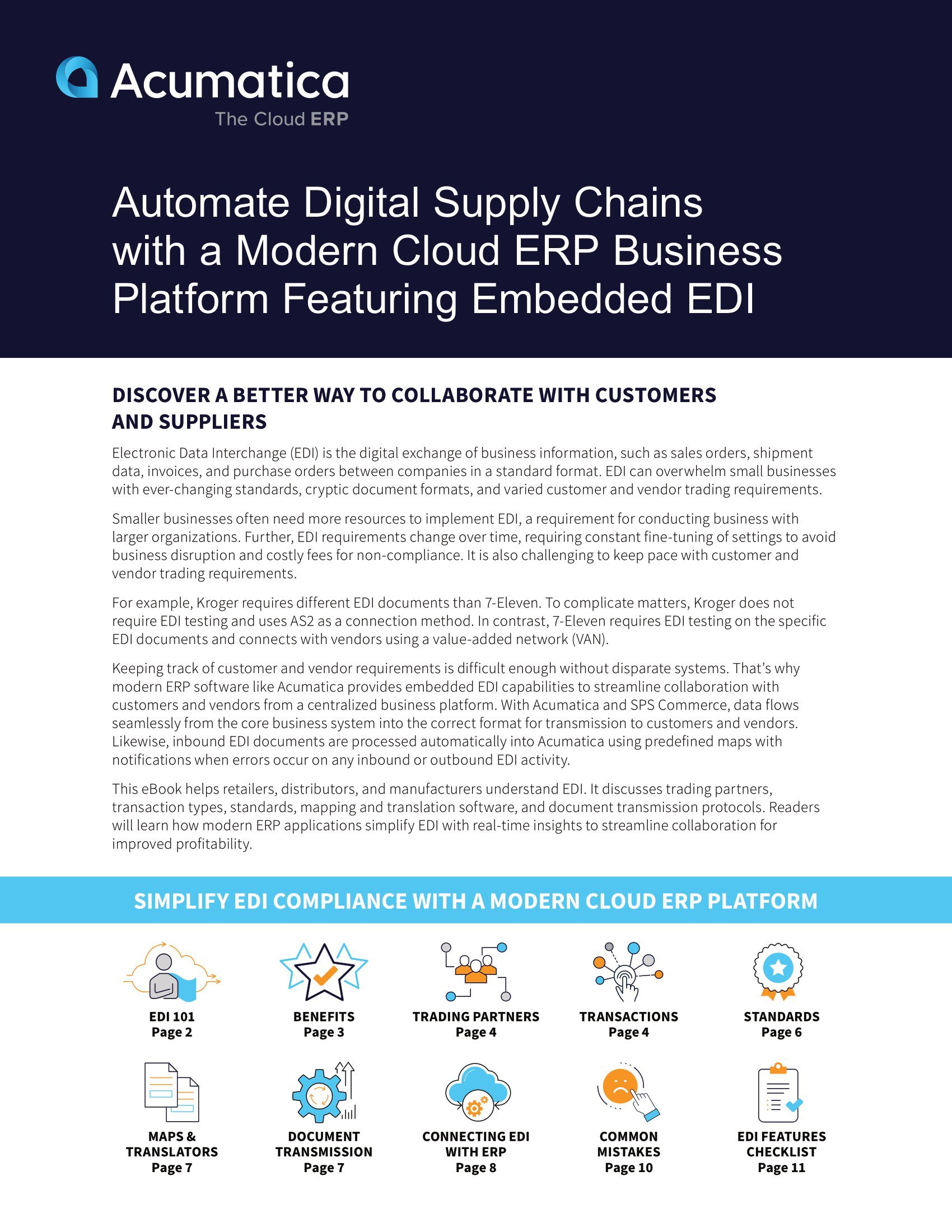
Automate_Digital_Supply_Chains

Download Supply Chain Automation Guide


Features to Look for in SCM Software

When evaluating supply chain software, ensure it supports your growth with these essential features:

  • Embedded EDI: Capabilities to process inbound/outbound transactions directly within the ERP.
  • Warehouse Management (WMS): Tools to organize space, manage inventory, and schedule labor.
  • Transportation Management: Features to optimize delivery routes and shipping documentation.
  • Turnkey Services: Access to providers (like SPS Commerce) who handle testing, mapping updates, and 24/7 monitoring.
  • Omnichannel Support: Connections to eCommerce platforms, 3PLs, and brick-and-mortar retailers.


Types of Supply Chain Management Software

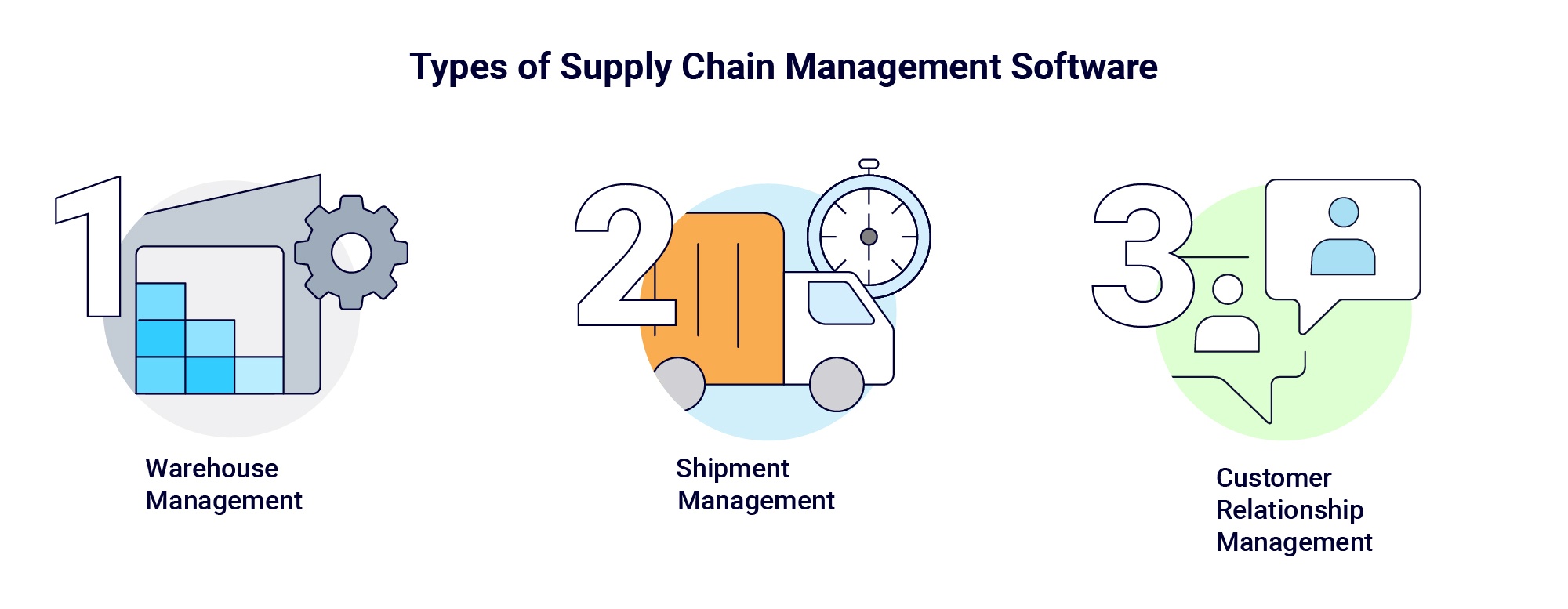
SCM software can be divided into several types, including warehouse, transportation, and customer relationship management solutions.

Supply Chain Management Types

Warehouse Management: With warehouse management software, your warehouse processes—from organizing your space and managing inventory to fulfilling orders, scheduling labor, and more—are fully automated and can be managed from a central solution through personalized, role-based dashboards.

Transportation Management: Transportation management software governs the movement of a business’s physical products from the warehouse to the customer. Whether you’re shipping by truck, plane, boat, or train, transportation management software optimizes delivery schedules, assists with documentation, automates shipping processes, and more.

Customer Relationship Management: A critical component to any supply chain process is your relationship with your customers. Customer relationship management software stores contact, opportunity, customer account, and customer transaction information in one place, enabling team members to access updated, accurate information they can use to service customers effectively.


Key Takeaways

  • Supply chain management software helps businesses of all sizes and industries across multiple stages, from raw materials to delivering it to customers. Through comprehensive ERP solutions, businesses efficiently manage the intricate details involved in this complex process.
  • The benefits of an ERP solution with supply management software delivers powerful benefits, including greater visibility, higher data accuracy, lower overall costs, and more creative teams.
  • Choosing the right SCM software today by doing intensive research into the product and the software vendor will prepare businesses for tomorrow’s challenges.


FAQs

Q: What is the difference between ERP and supply chain management software?
A: While they are related, they aren’t identical. Enterprise Resource Planning (ERP) is a suite of applications that manages core business processes, such as finance, HR, and services. Supply Chain Management (SCM) focuses specifically on the logistics of goods. However, the best solutions integrate SCM modules directly within the ERP for a unified experience.


Q: What is the difference between supply chain management and logistics?
A: Logistics is a subset of supply chain management. While logistics focuses specifically on the movement and storage of goods (transportation and warehousing), SCM encompasses the entire lifecycle, including sourcing, manufacturing, demand planning, and customer relationships.

Q: How does SCM software improve compliance?
A: It creates an immutable digital audit trail. Every movement of stock, every financial transaction, and every safety check can be logged automatically. This makes generating reports for agencies like the FDA, EPA, or IRS fast and accurate.


Q: Is cloud-based SCM secure for my data?
A: Yes. Modern cloud ERPs utilize enterprise-grade security protocols that are often far superior to on-premise servers. With role-based access controls and encrypted data transmission, your sensitive information is protected against unauthorized access.


Q: Why do I need EDI for my supply chain?
A: EDI is often a requirement to do business with large retailers and distributors. It replaces slow paper-based processes with digital automation, ensuring you get paid faster, reduce errors, and meet the compliance standards of your trading partners.


Q: What are the future trends of supply chain management software?
A: Supply chain management software is already a sophisticated and robust tool, but there are advancements on the horizon. Artificial intelligence and machine learning will continue to be used to automate repetitive tasks. Businesses will be focusing more sharply on supply chain risk management, and there will be a continued push for increased supply chain sustainability. Other trends include advanced data analysis features and enhanced visibility into every aspect of supply chain operations.

From ensuring that your products reach your customers to preventing disruptions to your operations, supply chain management is critical for your business.

Request a demo