 Canada (English)
 Colombia
 Caribbean and Puerto Rico
 Ecuador
 India
India
 Indonesia
 Ireland
 Malaysia
 Mexico
 Panama
 Peru
Peru
 Philippines
 Singapore
 South Africa
 Sri Lanka
 Thailand
 United Kingdom
 United States
 AcumatiCares

What are the most important trends for manufacturers to watch? And how does manufacturing management software help you stay ahead? Let’s explore the answers.
Despite an uncertain economy, a recent survey found that 69% of manufacturers are thriving despite an uncertain economy. This is great news. However, the industry still faces challenges that started during the pandemic. These issues have shaped four major trends in manufacturing today:
- Overcoming supply chain disruptions.
- Managing economic pressures.
- Adopting new technology.
- Solving talent shortages.
Today, we’ll look at these trends and see how modern manufacturing management software, as part of a complete ERP solution, can help you turn these challenges into opportunities.
Manufacturing Trend #1: Overcoming Supply Chain Disruptions
Supply chain disruptions have been a constant problem for the last few years. Many Chief Financial Officers believe these disruptions pose a significant risk to their business. The higher cost of goods sold is pushing manufacturers to find solutions. They are:
- Improving supply chain visibility.
- Raising prices for customers.
- Moving production to nearby U.S. allies.
- Finding alternative suppliers.
Another strategy is onshoring, also known as nearshoring or reshoring. This means working with local suppliers instead of relying on international ones. Onshoring boosts the local economy and protects a manufacturer’s supply chain from global conflicts.
To make these changes, companies need the right technology. A manufacturing ERP solution brings all your data into one place, providing real-time updates. You can use this information to forecast and assess your inventory, material needs, and logistics. The right ERP solution gives you a clear view of your resources. It also provides planning tools for delivery and production schedules. With powerful analytics, you can make fast, smart decisions to keep your operations running smoothly.
Manufacturing Trend #2: Managing Economic Pressures
Even with growth in the manufacturing sector, high inflation and recession fears affect every industry.
Manufacturers cannot control these large economic factors. But they can reduce their impact by using a single, strategic system for all their company data. A manufacturing ERP solution helps them:
- Anticipate and adjust prices to match economic changes.
- Make returns and exchanges simpler for customers.
- Track and lower costs across the business.
- Eliminate manual data entry to improve productivity.
Manufacturing management software also helps you find areas to streamline operations, pay down debts, and discover new revenue streams. All these steps lead to a stronger financial future for your business.
Manufacturing Trend #3: Adopting New Technology
Advanced technologies are transforming the manufacturing industry. These include artificial intelligence (AI), machine learning (ML), 3D printers, and the Industrial Internet of Things (IIoT). Deloitte notes that investing in these technologies helps manufacturers become more agile. This agility is key to building resilience and reducing risk.
When you invest in manufacturing management technology, you give your company the tools and information it needs to stay efficient and competitive. The best technology for today’s manufacturers includes AI and ML features that are ready to use right away.
A great ERP solution should also use open APIs. This allows it to connect smoothly with other important applications and specialized technologies. You can then monitor and manage every part of your operation from a single system.
Manufacturing Trend #4: Solving Talent Shortages
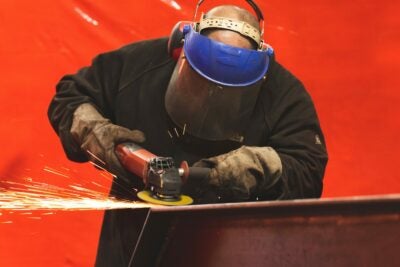
During the pandemic, manufacturing output and work hours dropped. Many companies had to lay off employees. This, combined with the Great Resignation and a wave of retirements, left the industry with a smaller workforce.
This was manageable at the time, but it has become a problem as the industry grows again. Manufacturers are struggling to find skilled workers or people they can train.
Fortunately, there are ways to address this labor shortage. You can hire talented women for roles traditionally held by men. You can also offer incentives that appeal to younger workers, like flexible schedules and remote work options.
Modern manufacturing management software is another powerful tool. It’s attractive to younger, tech-savvy workers. It also helps companies automate manual tasks. This reduces the number of employees needed in the office and on the factory floor. More importantly, a manufacturing ERP solution helps businesses accurately forecast labor needs and use their resources efficiently.
Letting Acumatica Help You Succeed
These manufacturing trends are likely to continue for years to come. To successfully navigate them, you need innovative manufacturing management software like Acumatica.
Acumatica Manufacturing Edition is built for make-to-stock, make-to-order, batch process, and project-based manufacturers. It offers a powerful suite of connected applications for production, estimating, engineering, material planning, scheduling, and product configuration.
Acumatica is an award-winning cloud ERP solution designed to help you meet challenges head-on. Our experts are here to answer your questions and schedule a demonstration to show you how we can help your business thrive.