-
English
-
English
-
 AcumatiCares
 Canada (English)
 Colombia
 Caribbean and Puerto Rico
 Ecuador
 India
India
 Indonesia
 Ireland
 Malaysia
 Mexico
 Panama
 Peru
Peru
 Philippines
 Singapore
 South Africa
 Sri Lanka
 Thailand
 United Kingdom
 United States

Hitting the Right ERP Note: Eastman Music Company’s Digital Transformation
Host Lauren O'Hara, Product Marketing Manager at Acumatica, speaks with Ralph Torres, Vice President of Operations at Eastman Music Company, about how Eastman has scaled globally with the help of Acumatica as their operational backbone.
LISTEN NOW ON:



Show Notes
Episode Description
Host Lauren O'Hara, Product Marketing Manager at Acumatica, speaks with Ralph Torres, Vice President of Operations at Eastman Music Company, about how Eastman has scaled globally with the help of Acumatica as their operational backbone. Ralph shares what it really takes to modernize globally with a robust ERP solution, why simplifying your data structure is the key to a successful implementation, and how his team built the reporting and visibility tools they needed to run a complex, multi-company business.
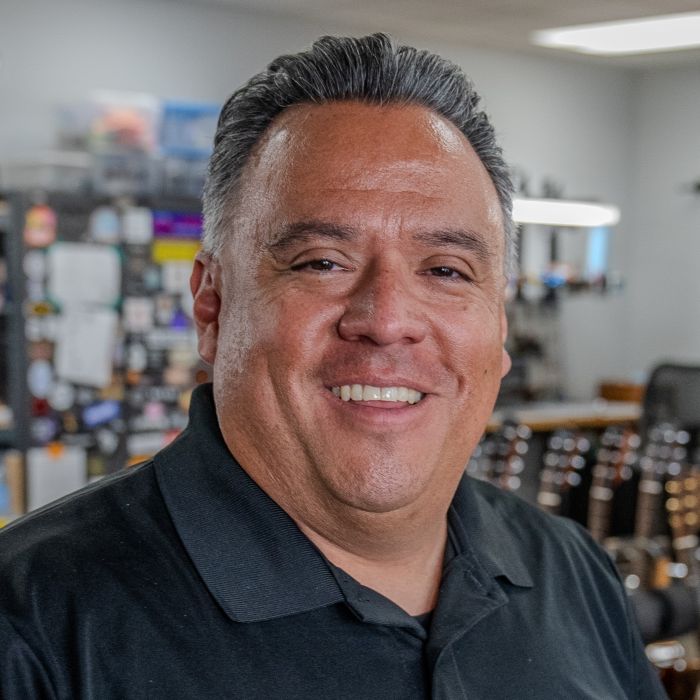
Ralph Torres
Vice President of Operations | Eastman Music Company
Links
Everything—we exist to solve problems. A customer exists because they have a problem. If you don’t solve their problem, they’re no longer going to be a customer. So problem-solving through critical thinking, that is my habit. That is what I am always trying to instill in my workflow and in all my employees’ workflows.
Transcript
Episode Transcript
In this episode, we're going to discuss how Eastman has navigated growth and what it looks like to modernize and scale with Acumatica as the foundation. So welcome to the show, Ralph.
Got out of college and started trying to gig and, and make money and, and figure out how to pay bills as a m- as being a musician, and I had no delusions of grandeur of what that life would look like. I understood how hard it would be to a musician making money, especially in a type of music that's not as popular with like jazz and stuff like that But I started doing a lot of things.
I was teaching private lessons, I was teaching at an after-school music program, I was gigging where I could and get gigs and stuff like that. And I just thought to supplement my income, maybe I could find some type of job related to the music industry. And when I started doing some searching, it ended up being...
I was, I was thinking more like, uh, working for a record label, like working for Sony or something like that in their jazz department or some- something that- Mm ... you know, directly related to my expertise. During the search, I just stumbled on Eastman Strings. At the time, they called the... Technically, the business's name was Eastman Strings at the time, and, um, this is back in 2008.
And they were looking for a customer service representative. I said, "Oh, that, that's close to home. It's music related. Let me see what happens here." And then- Yeah ... 18 years later, the company has grown many times over. Uh, when I started, it was two companies, plus the factories in China. Now it's 11 companies, plus the factories in China.
That fits, right? So some... I started at customer service. One of my first opportunities to do something outside of cu- customer service was managing our parts. And being a musician and being, doing pretty well at the customer service job, it worked pretty fast for me to be able to transition my just basic knowledge of instruments into managing a big, hard, complicated project like managing our parts.
And then over the years, I've, I've been involved in other product related things. I designed a, o- one of our best-selling saxophones, the 52nd Street, with one of my colleagues at the time. We've advanced and grown it many times over since then, but you know, when we first started doing saxophones, I was the guy, so that was cool and fun as a musician- Wow
to be able to, be able to say that I've had my hand in designing an instrument that I play.
All of my kids are going to go through music at least through the middle school level because it's, it's a unique human activity that requires use of the left and right brain, and you, you combine skills, analytical and creative skills, that you don't do in many other human activities. It... You just don't get that opportunity when you do other things.
So being a musician, being in a practice room and practicing the same me- measure for hours on end to try and just get two notes right, that's a discipline that is required, and what happens in your brain just doesn't happen in other types of places. So- Yep look at the complex structure of Eastman and analyze and understand how things correlate and work.
I truly believe my music background, my music education help feeds into my ability to manage something like this, 'cause I gotta be very creative, but I also have to be very data-oriented as well.
Like, the exercising both sides of your brain and how that can help you just kind of be a more well-rounded human in general, right? I love it. That's a great, great way of, um, looking at it. So tell me a little bit about just your role at Eastman and, I mean, we n- we kinda see the transition from your starting- Yeah
uh, off as a, in the jazz world, and then going into Eastman, so.
Mm-hmm. And, you know, we have technically 16 physical entities, uh, businesses throughout the, the world that are manufacturing or distributing product, and I have a hand in the operations in most of them. Not directly in our China operations. Obviously, there's a language barrier, time barrier, but they do their own m- they do their manufacturing.
But I am the liaison, and I do say, "Hey, this is, this is what we need improved," and things like that. So I do work with the China factories. I implemented Acumatica for them. They are using that- Oh, wow ... as of a year, a close to a year and a half now. So there's still a lot of structural support I give to the factories and, and definitely, you know, talking to them about packaging and the way they ship things and all these.
We have manufacturing facilities, Canada, United States. We just added a oval company in France this month. We have a brass instrument making in Switzerland. So we have, you know, all a- across the world type, um, manufacturing. A lot of my role for them is to make sure that they have the structural support-
Utilizing dashboards and, and the production scheduling and all the other tools that Acumatica has so that someone on the other end can say, "When's my trumpet gonna be made?" Or, "If I buy a trumpet, when can I get it made?" Something like that. And specifically, you know, since this is a Acumatica podcast, I have been able to add positions for that support.
So I have someone who's in charge of, like she's the ERP manufacturing admin. She's not at each location that manufactures, but all the companies that are using the manufacturing module in Acumatica, she's the one that s- helps them set it up. Mm-hmm. She'll work with them on how they do their cycle counting.
You know, all, all the functional nuts and bolts of, of the puzzle. And then there, our distribution companies are the ones I probably have more of a hands-on role. One, Pomona, California, where I... Kind of the global headquarters of the company. We're pretty spread out, but that's the main office and that's also our biggest distribution, our largest company revenue-wise.
But I also work with our distribution company in Australia and, and in Europe, uh, very closely
So one of them is, sounds like no day is the same. Sounds very, uh, wide-reaching. Yeah. Um, and, uh, kind of back to the, you know, you're, you're talking about, you know, using both sides of your brain and kinda having to be creative with your problem solving and things too, I'm sure. My other thought was, I know in the success story video that we have, you talk a little bit about how quickly you can get people onboarded with- Yeah
Acumatica, and you talking about your, um, you know, adding people, adding roles, and things like that. I was wondering if you could just expand upon that a little bit more about how Acumatica helps that.
So moving to Acumatica, it was just total night and day as far as just basic user interface. We're still, we're just mi- gonna migrate actually tomorrow over to the modern UI. We're still- Oh, cool ... in 2024, our two build. So that's fun, 'cause a lot of people- Mm-hmm ... are excited about that, the people that have seen what the screens look like and things like that.
But even, even just moving to s- to Acumatica when we did in 2022, it was a night and day user interface. Obviously, for our existing employees, it was a culture shock. Like, I don't know where everything went, right? The people who've been doing the same job for five, 10 years. I don't know where my buttons went.
But it's all the new people that we've brought on, it's just, it- you don't even have to tell them, right? Like, just the way the menu's set up, it's so much more intuitive to a modern, uh, type of interface, you know, user interface. Something I joke about with our team is just like, "I don't wanna hear complaints about that.
No one... No, y- I need better training. You didn't get trained to use Facebook and you're posting every day." You don't need the ti- and I say that kind of as a joke, but-
But y- you understand where the screen is set up. The buttons are pretty much in the same place on every screen. There's a green button, click that one. You know, it's, it's pretty intuitively built, and that's one of the reasons why it is much easier for us to onboard an, a new employee, for sure.
So hard to quantify that, right? I mean, that is time savings, money savings, and, and, and engagement, employee engagement, right?
But the computer interface aspect of that is so much less of a barrier, where we've gone from three weeks till we feel comfortable for someone starting to enter their own orders to it happens the first day, actually. Wow. They start, start clicking through things, and then we could teach them the business as they're learning the computer system, rather than ki- them kind of having to have been separate processes in the past
I love that. That's a great point. Thank you for expanding upon that. Okay. So Eastman, I know, has experienced a lot of growth, right? You, you mentioned that even at the very beginning about how many, you know, companies you all have now and where you've gone. So what are some of the operational challenges that you've experienced?
How did you know it was time to modernize your platform from Sage?
Obviously, people work over the weekends and salespeople always, you know, entering orders and stuff like that. But it's pretty close to 24/7. Not as much when we switched over, but it was getting pretty close there. So just having support that's available, having access that was easy globally. You know, anyone who's used an older system, something that's not cloud-based or, you know, how Acumatica is set up to where you can log in from a web browser.
Having to remote in, as soon as you say, "Oh, I had to remote in," that's just like, well, that's a whole can of worms about how to actually... You know, i- is the remote working today? If not, then, you know, it's 12:00 p- a.m. my time. Europe's not gonna be able to work today unless someone on IT who's on a call happens to answer their call and get the connect.
Anyone who's worked in that type of envi- environment- Mm ... understands how hard it is just to manage your eight-hour day, let alone expand that to a 24-hour day.
All of a sudden we're moving to a web-based thing, and as you lose all that security of remoting in, so Acumatica had checked off all the boxes for us on that. That was something that we were looking for w- with whatever it was, as we, as that was a piece of the p- problem. The other piece of the problem was our data was just getting so hard to use and analyze Because of the structure in, in Sage where every company is its own company, we had model numbers that might have been technically the same product, but maybe there was variation across the companies.
Sometimes I started getting to the point to where like, I don't think that transaction happened right. Was there a data problem? And then sometimes our support would be like, "Oh yeah, I re- I rewrote the data. It should be fine now." So that sounds terrible. What the... How's that even possible? How could you?
But that's what, you know, that's, that's... It was buggy, right? It was you gotta fix it, and they, they had workarounds and ways to fix it. So I j- I mean, I was just absolutely losing confidence. Like, did that tr- did that transfer even happen? You know, things would get hung up and then it... I don't, I don't know the technical aspect of it, but it was started getting very nerve-wracking- Mm-hmm
uh, some of the things we were hearing from o- from our Sage support partner that we had at the time. So that's, that was the other piece. It's like, look, if we're gonna keep adding companies, we need to have a much more streamlined of doing the reporting.
This is getting too hard. People are traveling more, and more, and more, and more, and more. They want to be able to access the ERP system. We did train our sales staff to enter their orders in Sage, and they were able to do it, but that became a barrier 'cause it was just they, you know, they had to go to their hotel room and then log in, go into the remote server 'cause they were gonna get their orders in for the day and, oh, it's, it's not working.
And it, it's just really hard without having the flexibility for the people that do wanna do work late at night, on the weekends to- Mm-hmm ... to fit their life or their travel, however that may be.
So that just sits, sits all the data kind of flows through, has to flow through finance in some way.
So it, but it still works totally fine for us because the data structure is the same underneath everything. Mm-hmm. So that's the, that's the huge piece about multi-companies. The last three companies we added, I did it myself Our, our VAR didn't even help with it. Obviously, they helped set up all the work in the past to do it.
Literally, our VAR was on vacation while I created the OBO company and its
where I wouldn't have thought possible. Even when we first started with, with Acumatica, but definitely not with Sage. When we added the new OBO company, I already had my attribute structure for stock items. So as soon as my product data guy just added those, and then, oh, we just need to add that company branch I- the company ID to all of our reports.
It wasn't automatic, but we knew exactly what needed to be done, and our reporting, my, uh... I have one guy who does most of our reporting. He was just able to add it to all the reports. He's like, "Yeah, you, I, I'll get these, uh, you know, one, the ones that we look at every day, I'll get those done by the end of the week.
The ones that we need for monthly reviews, I'll get those bo- done by the end of the month, no problem." Like, that, just being able to do that, and everything just fits underneath because the, the infrastructure on the bottom is all the same.
Like, oh, look, I can do... And, and problems, you know, you go back to the problem-solving thing, right? Like, how much fun it is to just try to go, "I can do this."
Right. You have to figure out how to make your big buckets flow into your small buckets, and what does matter to you for reporting, and then what doesn't matter to you for reporting.
Mm-hmm. But there's other things that we could use, like country of origin rule versus the company that makes it. That tells us whether or not it's distributed or manufactured. We can get creative with how we structure the data so that we can say, "This is the data point we absolutely want to report acro- across."
Okay. And then because you do that extra work, 'cause you get that structure set up, then when, it, that's what makes it dynamic to me, and scalable, and easy to add once you have that structure underneath.
Like, you're talking a lot about making sure you know where you want thing, your data to go, right?
You're obviously a super user of Acumatica. So what does, how, how does your team also help make that successful?
It's such a cultural shift for our staff. It's painful. Mm-hmm. It's painful, and it's hard because you're asking the entire organization that uses the RPU system, which is usually a big chunk of the company, to change what they, the biggest tool that they use. So that's painful and hard. You just have to set expectations that this is not gonna be easy.
That's the biggest piece. Just understand, uh, th- there's no version of this that's easy. Even if the ERP system automated it. Even if we get to the point to where none of us has jobs 'cause AI's doing it, it's still gonna be difficult because people are not doing what they did yesterday, and that's very hard- Mm-hmm
to make humans go through. We don't like change. So, so with that, we had a, a specifically unique problem in switching over, or the way we decided to tackle it, and that's that we have three companies at the time based in the US that our sales staff works across. So when we decided how we were gonna do this, the big decision was, do we just move Eastman, the main company, over?
Or do we take that three-company block over?
Because in Sage, we sell to X company while it's X1, X2, and X3 in the three different companies even though they're all X. So when we were gonna bring over open sales orders, open AR, I had to map this ID in Sage, this ID, this ID in company one, two, three is now gonna be this company in Acumatica. So there was a lot of work with the mappings, a lot of clean.
On the accounting side, the chart of accounts were different for all the companies, 'cause they were specific to that company. Mm-hmm. 'Cause Eastman's chart of accounts accounts for woodwinds, brass winds, guitar sales, percussion sales, right? But, but Haynes's chart of accounts or flute company only had woodwinds in it, and they weren't built at the same time by the same people even though it was the same company.
So there was a lot of prep work in order to, to get that. But the biggest piece of this is, and I've said it on stage, I've said it in the other podcasts that I've done f- about this thing, don't recreate your process, don't recreate your data that you have in your existing structure. That's why you're leaving your existing structure.
But, you know, I didn't really, really, really grasp 100% the complications of the chart of accounts until I started this project- Mm-hmm ... and understanding. And you know, they, even they were starting to put things together. I was like, "Guys, I think we're overthinking this. Either between product attributes or sub-accounts or some- something that I've seen in a demo, I don't think you need a separate GL for that type of sale.
You don't need a saxophone GL and a flute GL. We just need woodwinds. Like, we just care about the woodwind division, right?" Well, yeah. Okay, I can give you sales based off of product data, based off of the item class, based on an attribute from the item class. I could, I could do all these other things through my reporting.
So a big piece of this was me At least just seeing what the report availability was. Like, we weren't gonna, we didn't do Velixo at the beginning, but we knew it existed. Mm-hmm. So there was, it was a lot of educating myself. If I'm gonna have to take over the reporting on this, or at least manage the structure of how we do it, understand the reporting tools.
Really understand the reporting tools as fast as you can. Understand the concept of what a generic inquiry is. Understand if you're gonna look at a product like Velixo, how does that flow through? Because I, I didn't know how to write a generic inquiry, but I understood they existed, and I saw one get created from our VAR.
I said, "Just show me what this is." That was enough for me to go, "All right. I can get there eventually. Let's just figure out the basic structure now." So a lot of this was unwinding all the specific things that we did in Sage and bringing them into the biggest buckets that would give us the minimum amount of information that we need to operate.
So at a top level for the CEO, he can see how his woodwind business is doing versus his brass and wind through globally, throughout, with sell-through reports and all these other things now. But even then, we were able to say, "All right, well, we're selling tubas." You know? We're selling our, our basic structure of instruments based off of item class, but on the GL side, it's just five big, giant categories.
Yeah. But at the same time, uh, making things much simpler, and that sounds like it was a combination of, you know, the platform of Acumatica and your ability to- Yeah ... look at your data and say, "This is how we want it to be in Acumatica. Make it simpler."
This was November 2022.
Our, our busy season is after school season because we do a lot of school business. So, uh, so timing is another thing. Make sure you do it, you know, not, there's never a time to do anything. But make sure you do it when you can manage and you're gonna hurt a little bit because you don't even... You think you know what an invoice is gonna look like, but you don't realize the different versions that you've created of your existing invoices.
"Oh, I forgot we needed that. I forgot we needed that." So there's gonna be a lot of work once you implement, uh, or maybe not. Maybe you have-- Maybe you've done this before and you have a VAR that does all that setup. But for most companies, I'm pretty sure this is what happens. You think you know what's gonna happen, and then day one, yeah, all bets are off.
You're just flying by the seat of your pants for a week or two, and eventually you start, your team starts understanding how to push the orders, how to push the invoicing through the accounting department, that you start getting these repetitions of doing things and understanding why that's, why can't I cr- oh, I don't have inventory in the right place.
You know, you figure out, you start learning the issues because, you know, and Sage would let you do a lot of things just 'cause it would let you do it, where Acumatica definitely has a lot more you have to do it the right way for the financial transaction to happen correctly. So you gotta do it the right way.
You can't do it out of order. So a lot of it was learning that through the beginning, and one thing I did is immediately the sales staff, "Where's my report? Where's my information that I always can get?" It's gone. Remember when I told you we were doing this? That's what it meant. When I said it was gonna all be gone, that's what I meant.
Now it's gone. So I was really strict with the, the whole team at the beginning. Don't ask me to create anything for you until you show me what reports in Acumatica you've already tried to use. So use what's in... I didn't wanna create out of the box, recreate everything that we had before. Yeah. There was one daily sales goal report that we had out of, out of, uh, Sage through one of the reporting tools that I, that, okay, that we need to have.
So I did work with Arvar at the time. Before the transition, I worked with ISS on this, and I said, "Hey, Troy, I really need this report. Just get me this one. Everything else we'll, we'll figure out afterwards." So when we were over, and when we got through that initial hump of just getting invoices out, then questions started coming in.
How do I look this up? How do I look this up? Go, you see in the sales order module, you see where it says reports? Go there and start clicking buttons. Figure out- Yeah ... the tools that we just paid for before you ask me to make a new one.
I see why this doesn't work for the way we do business. Let's tweak this report. I see we want information, but a little different way. Let's pay to have this report tweaked." All right, now we're over that initial hump. Teach me GIs. And then, uh, ISS, or Arvar, all right, let's learn how to do some GIs. So he built some GIs with me.
I was like, "Okay, I get it. I could do some of this." And then that's when we a- we added, uh, one of our first new, like, global operational ERP positions was a, a report-
It's like okay, this guy's, this guy understands it, so I stole him over, and now he does the global reporting for the company. And he's not trained in this. He j- you know, he's a musician himself. But he's also a techy, computery guy. He almost went into a computer science degree, but decided to do music. And so he's, he, it's a great job for him now.
He gets to work for a music company.
Let's figure out a way to get that report," right? With- Or, or take what is existing and, and modify it to suit your needs. Correct?
But even something like that, you know, being able to get our HS import tax codes on all of our different product, well, it's not that easy for us because we have four different companies in Europe, and they have different HS codes. No, three different companies in Europe and one in Canada, and they all have different HS codes, and they're all in the same tenet.
I mean, how am I gonna get them to have their HS code print up for their exports, you know? And that's where we just use attributes. I'll just create an attribute for- Yeah ... HS code Canada, HS code UK, HJ. So now that's an attribute for item, now we could add that to the report designer. Mm-hmm. So that's how that works, right?
Okay. If this branch put this HS code. So there's a lot of things that we were able to, I was able to learn through just looking at the report design- designer scene. There's one great thing that's a huge difference from our Sage, but I, I, I would assume it's similar to most modern ERP systems. There's so much, one, with the Acumatica community, two, the training that Acumatica has on the Acumatica ed- educational website, and three, so many of these resellers want your business that they're just putting out free training to try and get you to, to know their company, but it's, it's fantastic content.
There's so much information on YouTube- Yeah ... and the Acumatic assets for training. That's a huge thing, going back to just even user adoption. But, um, being able to ourselves learn how to do generic inquiries with the existing generic inquiries in Acumatic and, oh, that's how they built that, and then just expanding on that.
Yeah. It, it allows us to get creative and figure out- Mm-hmm ... solutions to problems- Mm-hmm ... on our own without having to go ask someone else.
People enjoy the visibility for, of the data, right? Can you talk a little bit about how having that sim shows, I know we've talked about it a little bit, touched on it, but specifically how, you know, having that one centralized source of the truth has really changed the way that you and your team can make decisions and view, you know, and, and react to, to things.
So we're, we're redoing our dashboards in Acumatica to give that visibility of you were supposed to ship this yesterday, you didn't, now it's red, take care of it. So there's a lot of that type of visibility, right? Like the green, red, y- yellow, green, red is so universal. We understood if it's yellow you gotta worry about it.
So being able to define those things and then translate that to a piece of data in Acumatica and just give it to someone on a dashboard, hugely beneficial. Some of the things we don't even go to that point, we just create a generic inquiry. I'm like, "I don't wanna see any shipments that are not this month by the halfway through the month.
We should have shipped everything that's a shipment within the last two weeks. Don't let anything, any shipments go. If it is, then I want you to grab resources and get that shipment taken care of and figure out why it's held up." So that's the type of thing that we can do with just, you know, basic visibility of data that makes it pretty easy.
Then there's the much more complex things of figuring out how our company is doing in this US version of tariff, no tariff, tariff, no tariff, tariff, no tariff, and then out of land... And e- even with that, we were able to talk about flexibility, right? We don't really worry about landed costs at Eastman because we buy from ourselves, so I'm like, I don't care what the shipping versus the invoice, you know, the amount was, we're buying from ourselves.
I'm not, I can't buy a trumpet from a different person, so I'm not using landed cost to type, to, um, analyze vendor total spend type thing, right? But All of a sudden, tariffs are a huge point, could, you know, portion of the purchase price of a product, so now we added landed cost. So we were able to do that, like Acumatica has landed costs.
Mm-hmm. So we were able to figure out a creative way to just to get the tariffs into landed costs so our COGS made sense with whatever price increases we had to do to try and, you know, recover some of the difference, some of the
We've been able to do it. And even as far as using user-defined fields to help us understand what sales orders were affected by a tariff increase versus, versus not. So that's again, creativity, like, so that's the type of visibility we're able to kind of think through, well, I need this as a result, this is my input.
What buttons are we gonna press in Acumatica and what gaps do we have in those buttons in order to get that result? Mm-hmm. So I want to know if someone entered an order and we had to raise the price on it in order to help cover tariff costs, and did we do that on that sales order? Oh, user-defined field, tariff charge.
That's a check mark on a sales order. So there's a lot of different ways, that's a- an example of where that gives that. And then that ties into the visibility. Mm-hmm. Now that whatever happens in the world with tariffs going forward, we have the visibility on what happens, is things that happened in the past and how those were affected.
Or bigger scope things of just like, all right, we need to look through all of our balance sheets and income statements, so we can have one consolidated report that allows us to see that. A very complex part that we have is that we buy and sell from ourselves a lot So I don't care if we sell a million dollars of clarinets out of Bacun into the US if I still have a million dollars of Bacun clarinets in stock in the US.
I care about the sell-through. So we're able to create reports now where we have four different entities buying and selling from each other to get something from point A to point B, but now we have a sell-through report where we're able to say, "This is what we're actually selling outside of ourselves, not just within ourselves.
This is- Wow ... what we sold to ourselves, this is what we sold outside of ourselves, and this is how that impacts our entire global financial picture," that you wouldn't get if you're just looking at a singular company's P&L.
Mm.
The warehouse, none of the packers aren't using it. But there's a lot of people in our business that are using it. We have over 200 plus users that are actively using Acumatica at least weekly. Most users are using it daily. Most users are, are, you know, probably six hours of their day is Acumatica work verse it co- combined with, you know, email management.
what's happening in the real world. So in every way that we need to have a digital representation of what happened in the physical world, we're trying to use Acumatica for that need.
how the, that works, and how that benefits Eastman.
Everything's going onto a SaaS consumption model, right? And usually it's per user base, right? We're even, we're looking at, at solutions for, oh, how do we maintain our, our machines? Are we gonna use an Acumatica, an outside thing? You know, we're always looking at, at, at things on how we're gonna implement a product that does something.
But then you get that per user fee, it's like, scalability, it just kills it, right? You're like, "Okay, well now I gotta pay $60 a user." It's not gonna break a company like ours, but I'm not gonna let every user use it. Yeah. Now I have to, now I have to do more work to figure out what's the minimum amount of people I can get a license for and still get what we need out of it and not have that become a barrier.
There's a dollar above their head. Now I have to figure out what's the ROI on that, right? I don't wanna calculate that out. I don't wanna deal with any of that stuff. So that's why Acumatica's usage-based pricing- Yeah ... versus user base is amazing.
Mm-hmm. Because that's not a lot of usage. If I go from 100 users that use it all day long to 1,000, then yeah, there's gonna be an increase in price, but we've already had to increase our license a few times because we've added more companies and we've added, uh, have more usage, and oh, I guess we're sending out too m- too many emails now.
So, so I'm writing for the bill, and it's like, "Oh, that's not too bad. That's fine." So, so when we have had to increase our pricing because of usage, it's, it's definitely been well within reason of more use that we're getting- Yeah ... out of it bec- that required us to get that, that trigger that we're over our usage.
But yeah, not having to worry about users, and that's, uh, ERP cost is just not part of it. You know, I already have to pay for their Microsoft license if they're gonna be a user 'cause we're using single sign-on. I already have to pay for IT support for them on that. I already have to pay for their computer.
I have to pay, pay, pay, pay, pay, pay, pay. You know, when you add comp- employees, it's not just their salary, it's all th- then their benefits, and then their- ... just cost to keep them working and give them the tools they need.
But when you deal with the people that interface with the ERP system, it's just- Right ... so much more. We did, in Sage, we used to have, it was concurrent licensing, which wasn't as bad, but then 3:00 every day, "Okay, get in Sage. Who's still logged in? Make sure you log me out." And that was terrible. You know, it gets rid of a big barrier as far as scaling up the product.
When we, we just bought a new company, if they don't have a lot of users, but I'm also not worried about sending, paying for them to, to access Acumatica. We gotta pay for their email and things like that, and everything else as far as Acumatica goes is fine. That whole company's not gonna add enough usage to kick us up to the next tier, so it, it's not costing us anything to add that company and have them utilize Acumatica.
Um, I know we've talked about, like, the data, you know, and preparing and understanding the fact that it's gonna be kinda painful in the big picture, right? But could you, uh, give us some other pieces of wisdom from your, uh, from your toolkit?
Pull yourself out of that, look at it objectively, and really understand if this is the way you want to be doing it.
that created the process that you have right now, and it's a hodgepodge of things. This is really your opportunity to hit a giant reset and do things in a more structured, in a more, uh, streamlined fashion.
This is our lightning round. Okay. And, um, basically, you know, you can take as long as you want to answer the question, but I, I don't want you to think too hard about it. You know, like, come up with what comes in your brain first. So-
Like, what, what one piece of music just pops in your head that you will never get tired of?
my most hated question- Yeah ... from my kids every day.
That's- Love it ... that is what I am always trying to instill in my workflow and in all my employees' workflows.
Yeah. And that's why I say it that way.
Thank you. Thank you to our listeners as well for tuning into the Acumatica ERP podcast. Be sure to subscribe so that you don't miss other conversations about practical innovation for growing businesses.
The Acumatica ERP Podcast
Practical innovation for growing businesses